Introduction
In this project, you will learn how to fix a bug in the vue-router-3.1.5 library. The bug is related to the fillParams function, which is responsible for filling in the parameters in the URL path. When the pathMatch parameter is an empty string, it can affect the calculation of the correct path.
👀 Preview
🎯 Tasks
In this project, you will learn:
- How to locate the
fillParamsfunction in thevue-router-3.1.5/src/util/params.jsfile - How to modify the
fillParamsfunction to address the issue with emptypathMatch - How to rebuild the
vue-routerproject with the updatedfillParamsfunction - How to test the fix by refreshing the browser window and verifying the correct behavior of the address bar
🏆 Achievements
After completing this project, you will be able to:
- Identify and fix bugs in a third-party library
- Rebuild a project after making code changes
- Test a fix to ensure the desired behavior is achieved
Fix the fillParams Function
To get started, look at the directory structure of the files on the left as follows:
├── vue-router-3.1.5
├── vue.js
└── index.html
Click on Go Live button in the bottom right corner of WebIDE, to run the project.
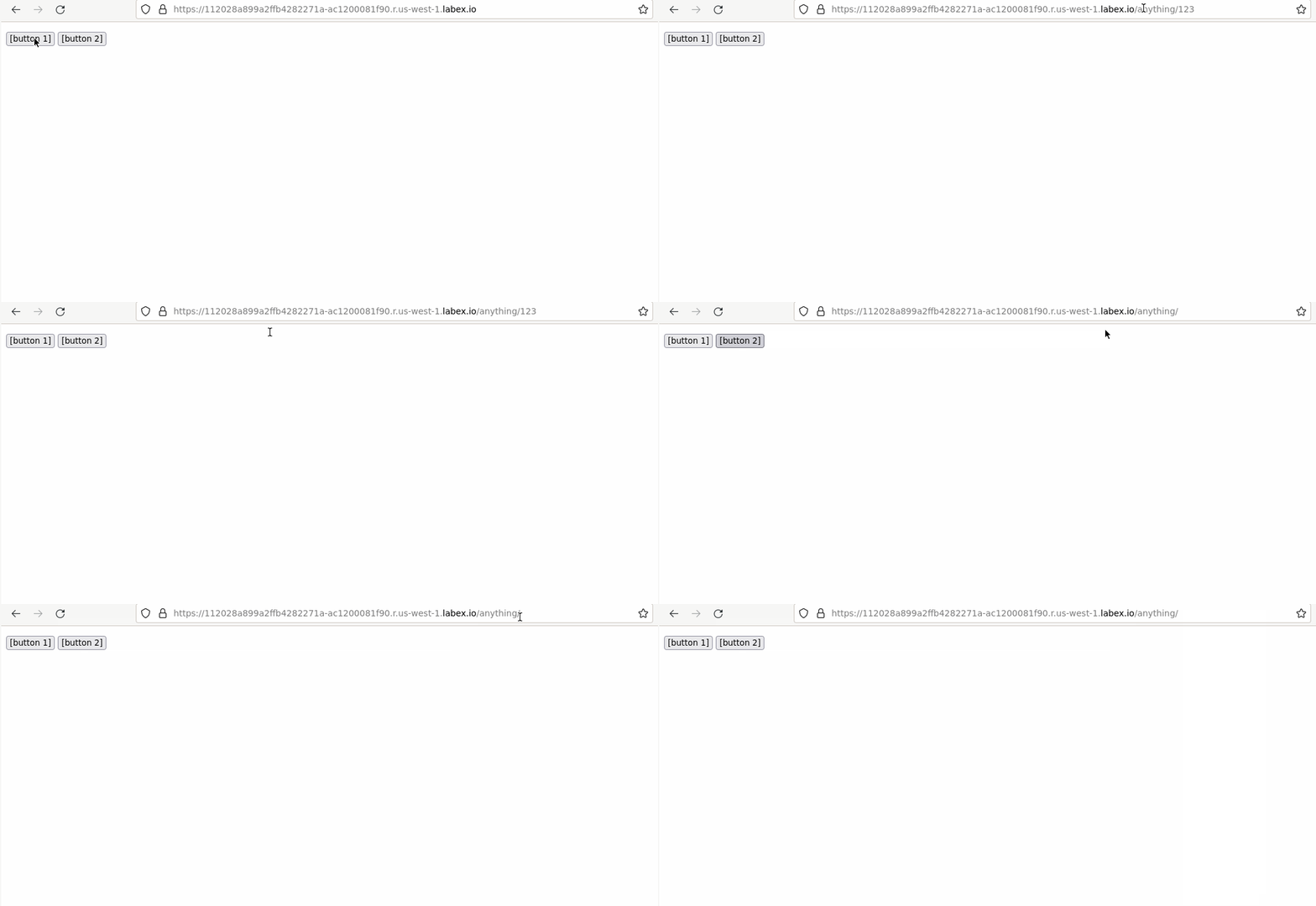
Open "Web 8080" on the top of the VM and refresh it manually, the effect should be as follows:

Copy the address in the above figure in the browser to open a new window, respectively, click on the "[button1]" button and "[button2]" button, the effect of the address bar is as follows:
In this step, you will fix the fillParams function in the vue-router-3.1.5/src/util/params.js file to address the issue with empty pathMatch.
- Open the
vue-router-3.1.5/src/util/params.jsfile. - Locate the
fillParamsfunction. - Add the following code after the line
if (params.pathMatch) params[0] = params.pathMatch:
if (params.pathMatch === "") params[0] = "";
This code checks if params.pathMatch is an empty string. If it is, the function will return the original path instead of trying to fill the parameters.
The updated fillParams function should look like this:
export function fillParams(
  path: string,
  params: ?Object,
  routeMsg: string
): string {
  params = params || {};
  try {
    const filler =
      regexpCompileCache[path] ||
      (regexpCompileCache[path] = Regexp.compile(path));

    // Fix #2505 resolving asterisk routes { name: 'not-found', params: { pathMatch: '/not-found' }}
    if (params.pathMatch) params[0] = params.pathMatch;
    if (params.pathMatch === "") params[0] = "";

    return filler(params, { pretty: true });
  } catch (e) {
    if (process.env.NODE_ENV !== "production") {
      // Fix #3072 no warn if `pathMatch` is string
      warn(
        typeof params.pathMatch === "string",
        `missing param for ${routeMsg}: ${e.message}`
      );
    }
    return "";
  } finally {
    // delete the 0 if it was added
    delete params[0];
  }
}
Rebuild and Test the vue-router Project
In this step, you will test the fix by refreshing the browser window.
- Open the
vue-router-3.1.5directory in the terminal. - Run the command
npm installto install the dependencies. This process might take a while, please be patient. (If it gets stuck for a long time, please pressCtrl+Cto terminate the process and then run this command again.) - After all dependencies have been successfully installed, run the command
npm run buildto rebuild and release the project. - Go back to the browser window and refresh the page.
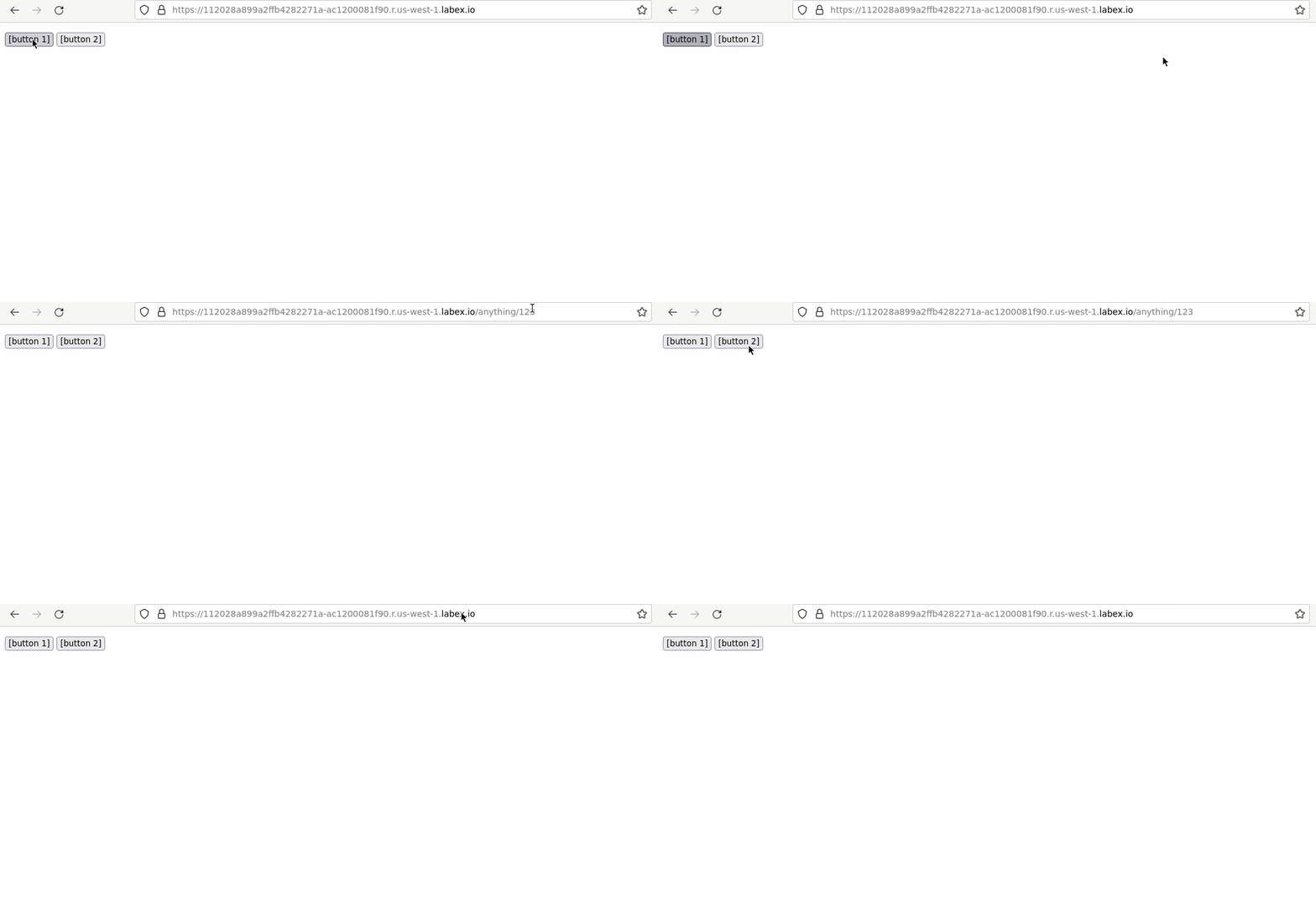
- Click on the "[button1]" and "[button2]" buttons again, and observe the behavior of the address bar.
The address bar should now display the correct path, even when pathMatch is an empty string. The image of the effect after the problem is fixed is shown below:
Congratulations! You have successfully fixed the issue in the vue-router-3.1.5 library.
Summary
Congratulations! You have completed this project. You can practice more labs in LabEx to improve your skills.