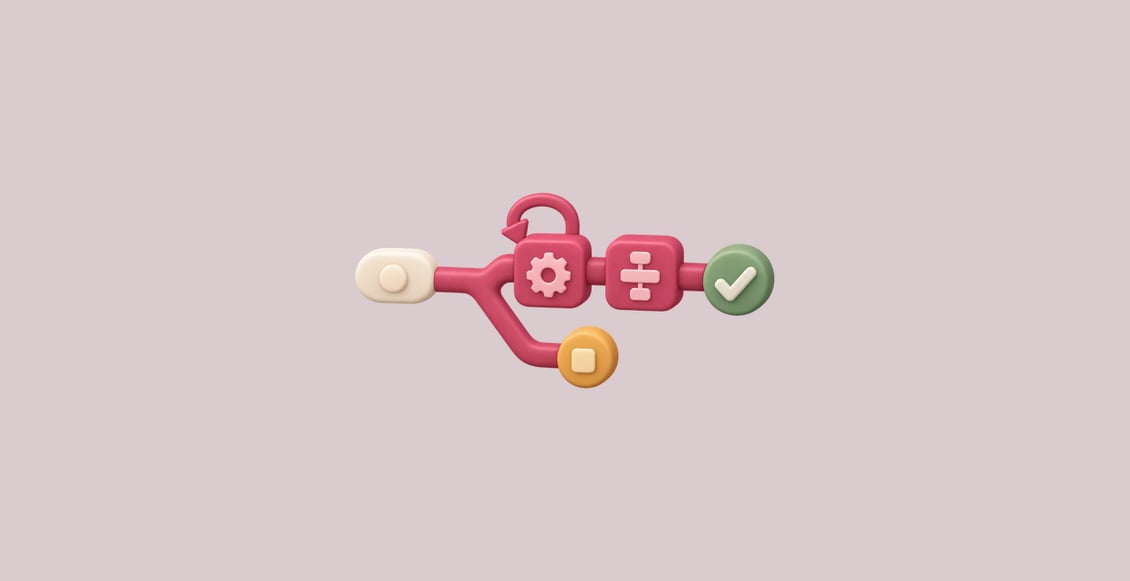
Keep jobs available when consumers are slow or fail, notify downstream teams and protect business results from repeated delivery. Learn SQS and SNS through a small order-processing workflow.
Five guided labs cover consumption, visibility, dead-letter queues, SNS fanout and duplicate protection. The independent challenge repairs an incident where failed work never reaches the recovery queue.
What You Will Learn
- Send, receive, process and acknowledge SQS jobs
- Observe visibility windows, redelivery and current receipt handles
- Isolate failed jobs in a dead-letter queue
- Fan out SNS notifications to filtered SQS subscriptions
- Use DynamoDB conditional writes to protect a repeated business operation
- Repair failed-job routing while healthy work continues
- Verify stored results and remove only owned resources
Who This Course Is For
This course is for learners ready to extend a serverless application with asynchronous work and failure handling.
Prerequisites: Start with Lambda–DynamoDB access (FN03) and its guided prerequisites. Learn Q01 → Q02 → Q03 for queue processing and failure isolation. Q04 also needs IAM resource policies and is a separate SNS branch; Q05 needs DynamoDB conditional writes (D04) and Lambda code updates (FN02). The service challenge follows Q03 and its prerequisites; PS02 also uses Q05.
Learning environment: All activities run in a provided browser-based LabEx Linux environment. Use Terminal for AWS CLI commands and AWS View above Terminal to inspect the same resource and application state. Tools and the connection are prepared; you do not need a personal AWS account or access keys. Each lab starts independently in a fresh VM. AWS View displays queues, message bodies, attempts, logs, SNS envelopes and stored orders. Read-only observation does not receive or acknowledge messages.
Frequently Asked Questions
Does a configured queue prove that jobs are processed?
No. Check actual processing, stored results, acknowledged source messages and retained failed work. Supplied workers and reference data let you focus on those outcomes using synthetic jobs.
Why does a message have a new receipt handle?
A receipt handle belongs to one delivery. When visibility expires, another attempt can occur and has a current receipt. Use the handle for the delivery you intend to acknowledge.
Does duplicate protection mean exactly-once delivery?
No. Standard queues can deliver more than once. A conditional single-item write protects the taught business effect, but queue operations and database writes are separate; this is not an atomic transaction or an end-to-end exactly-once guarantee.
What is the scope of the messaging examples?
Standard queues with a size-one consumer, dead-letter redrive, same-account SNS-to-SQS fanout and message-attribute filters. FIFO ordering, arbitrary batches, production throughput, cross-account policy design and full service retry guarantees are outside scope.
What project follows this course?
Recover Poison Messages Without Duplicating Orders in the Serverless project course. The service challenge needs Q03 and its guided prerequisites; the project also needs Q05. Verify function before cleanup.