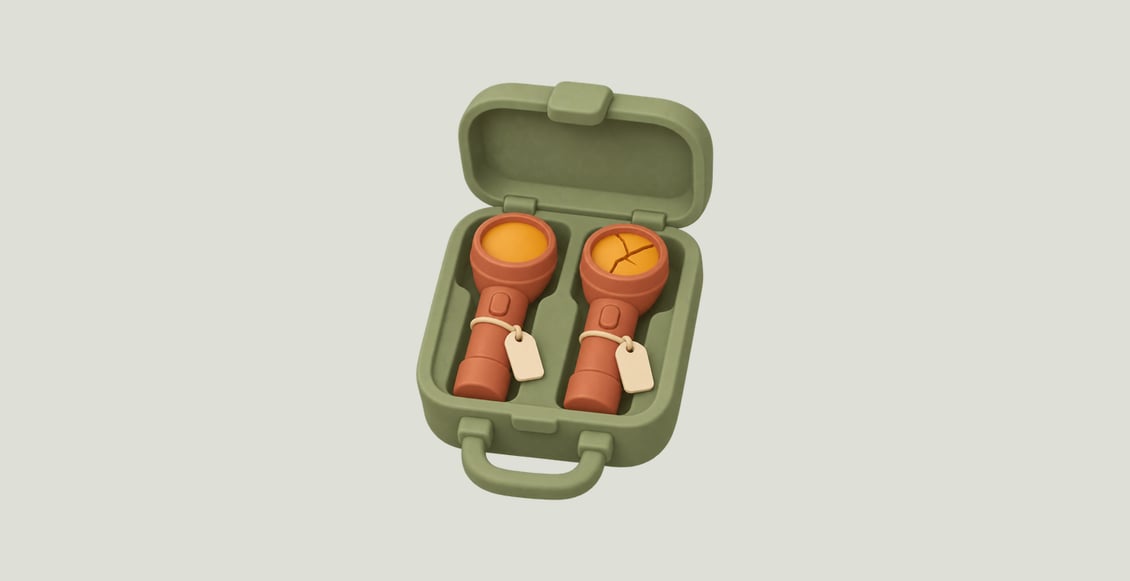
Checking a Field Kit is a Rust project for learners who want to turn related records into an explainable equipment check. You will compare a trip plan with scanned asset records, keeping equipment type, individual asset identity, and condition separate. Two scanned flashlights do not satisfy a requirement for two working flashlights when one is damaged.
Two Guided Labs move from identifying assets to explaining shortages and surplus. One Challenge applies the same rules to a different trip. Each lab has its own prepared project and inputs; no files or processes from an earlier environment are required.
What You Will Learn
After completing this course, you will be able to:
- relate equipment type IDs to plan requirements and asset IDs to individual objects, even when different types share a name;
- read the specified TSV input paths without changing the sources, count identical repeated scans once, and reject conflicting records for the same asset;
- count only
goodassets toward requirements and calculate missing and surplus quantities per type without arbitrarily assigning surplus status to particular assets; - explain each type with its required, good, missing, and surplus counts and complete good/damaged asset ID sets, and classify every asset as planned or unplanned;
- treat a planned type with no scans and a requirement of zero as valid input cases, while retaining damaged and unplanned equipment in the result.
Who This Course Is For
This course is for Rust learners ready to combine collections, typed records, and recoverable errors in a small file-processing program.
Prerequisites: Basic terminal use and Rust structs, enums, HashMap, Result, file operations, and basic iteration.
Learning environment: LabEx provides a browser-based Linux Terminal, a prepared Rust project, and synthetic plan.tsv and scans.tsv files. You work with a controlled tab-separated format, not a general CSV reader. Terminal labels and program output remain in English.
Frequently Asked Questions
Do I need a scanner or real equipment?
No. The course uses synthetic scan records. Its conclusions describe those records; they do not certify the condition of physical equipment.
Are extra or damaged assets input errors?
No. Keep them visible. Damaged assets never fill a requirement, and unplanned good assets contribute to surplus. Conflicting type or condition records for one asset are errors; do not silently keep the last row.
How long should I allow?
The author estimates 115–155 minutes, including reading and ordinary mistakes. This estimate has not been validated through a beginner walkthrough.